Peristaltic pumps are among the most widely used positive displacement pumps and are indispensable in numerous industries. The hose , their main component, is crucial for pumping liquids. Pump performance, precision, service life, and safety depend significantly on the quality and correct selection of the hose. Unlike many other pumps where the liquid comes into direct contact with the mechanical parts, the hose in peristaltic pumps is the only component that comes into contact with the liquid, underscoring its importance.
This article provides a comprehensive overview of the tubing used in peristaltic pumps. It explains everything from their definition and function, to the types of materials used, selection criteria, factors influencing their lifespan, application areas in various industries, and maintenance and replacement methods.
What is a peristaltic pump? And what is the function of the tubes?
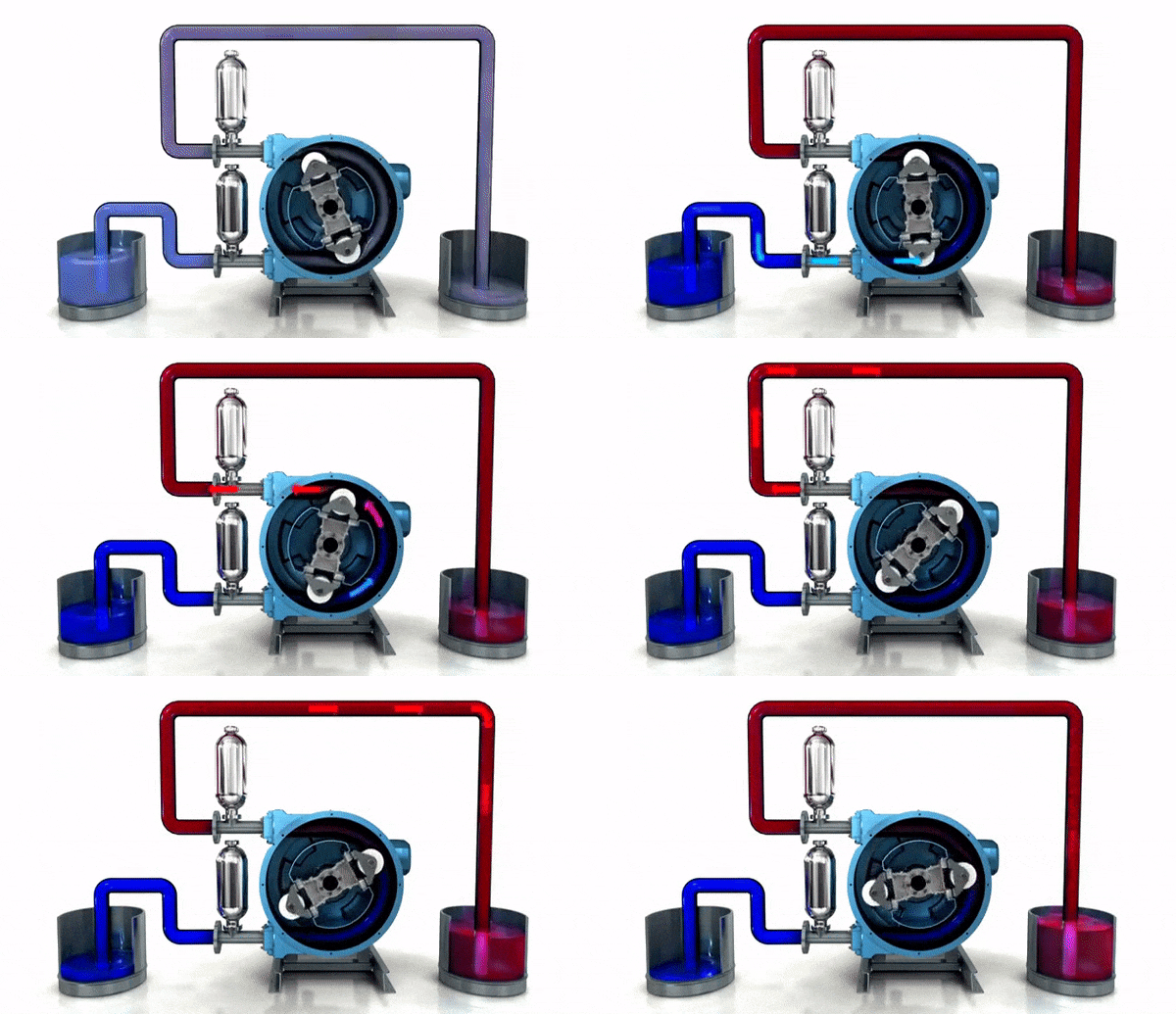
A peristaltic pump is a positive displacement pump that operates by repeatedly compressing and releasing fluid within a tube. In this type of pump, a roller or guide partially compresses the tube through its rotation. The resulting pressure creates a vacuum behind the compression point, drawing the fluid into the tube. The continued rotation of the roller then propels the fluid through the tube to the outlet.
The oil line acts as a channel, a seal, and even determines the flow rate. Choosing the wrong oil line can therefore lead to reduced pumping accuracy, pipe bursts, leaks, or even premature pump failure.
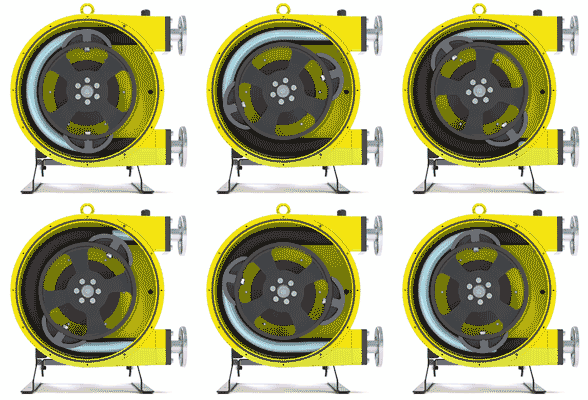
Key features of flexible hoses in peristaltic pumps
The hoses used in peristaltic pumps must have certain properties that distinguish them from conventional hoses:
- High elasticity: Withstands constant pressure without tearing.
- It has good elasticity: after being compressed, it quickly returns to its original shape .
- Chemical resistance: Compatibility with the liquids circulating within it.
- Wear resistance: Resists continuous friction with the cylinder.
- Pressure and vacuum resistant: prevents crushing and tearing.
- Uniform inner surface: to ensure precise material flow and prevent material build-up.
Common hose types for peristaltic pumps.
When designing and operating a peristaltic pump, the choice of hose material is one of the most important decisions. Each material has its specific properties and areas of application.
1. Silicone
Silicone hoses are among the most common options. This type of hose is very flexible and offers a wide operating temperature range.
Advantages:
- excellent flexibility
- Suitable for the food and pharmaceutical industries .
- High temperature resistance
Shortage:
- Its corrosion resistance is not as high as that of other materials.
- Limited lifespan under resource-intensive operating conditions.
2. Shandoen
Santoprene is a mixture of rubber and thermoplastic that combines flexibility and strength.
Advantages:
- Long service life
- Good chemical resistance
- Suitable for continuous operation.
3. Nobri
Norprene is one of the synthetic materials widely used in peristaltic pumps.
Advantages:
- Excellent corrosion resistance
- Stable operation at a constant flow rate.
- Suitable for use in all weather conditions.
4. Fluorinated rubber
This material is suitable for processing special chemical liquids and under high temperature conditions.
Advantages:
- Extremely high chemical resistance
- Suitable for solvents and corrosive substances.
Shortage:
- reduced elasticity
- Higher price

The influence of pipelines on pump accuracy and flow rate
One of the most important advantages of peristaltic pumps is the high accuracy with which they can deliver a specific volume of liquid. This accuracy depends significantly on the properties of the tubing, as the inner diameter, wall thickness, flexibility, and manufacturing quality directly affect the flow rate.
Any changes to the mechanical properties of the pipe, such as hardening or loss of elasticity, can lead to fluctuations in the flow rate. Therefore, regular replacement of pipes is essential in high-precision systems.
Lifespan of flexible hoses and factors that influence it.
The lifespan of a peristaltic pump’s hoses is one of the most important indicators of its cost-effectiveness. Several factors influence this:
- Material type
- pump
- Degree of obstruction
- Ambient temperature and liquid temperature
- Fluid type (abrasive, corrosive or viscous)
- Continuous working hours
By correctly adjusting the pressure ratio and selecting suitable materials, the service life of pipelines can be significantly extended.
Installation instructions for the Springwell chemical injection system
Application of pipes in various industries
Pharmaceutical and medical industry
In these industries, hygiene and the prevention of fluid contamination are of paramount importance. Silicone and medical tubing are among the most commonly used materials.
Food and beverage industry
Food-grade hoses are used for transporting sauces, syrups, dairy products, and sensitive food ingredients.
chemical industry
Chemical-resistant pipes, such as those made of Viton, are used to transport acids, alkalis and solvents.
Water and wastewater treatment
Noboli and Santo flat tubes are very common in chemical injection systems.
Important points to consider when choosing the right hose
The following points should be taken into account when selecting suitable pipes :
- Chemical compatibility with liquids
- Operating temperature range
- Required pressure and flow rate
- Health standards
- Costs and acquisition
- Average life expectancy
Choosing the right pipe material can reduce production downtime and maintenance costs.
Maintenance, inspection and replacement of pipelines.
Regular inspection of hoses is crucial to avoid unexpected failures. Signs such as cracks, discoloration, loss of elasticity, or fluctuations in flow indicate the need for hose replacement.
Replacing the oil lines in a timely manner not only prevents fluid losses but also maintains the accuracy and stability of the pump operation.
In conclusion
The hose is the most important wear part of peristaltic pumps, and its correct selection significantly impacts performance, precision, safety, and operating costs. Knowledge of the various materials, operating conditions, and process requirements helps users find the optimal solution. Proper hose selection and maintenance also enable users to fully leverage the advantages of peristaltic pumps across various industries and extend the system’s service life.